Current affairs scare aspirants because the news never stops. But exams don't test "the news" — they test a small, predictable slice of it. Once you know which slice, 30 minutes a day is plenty.
What exams actually ask about
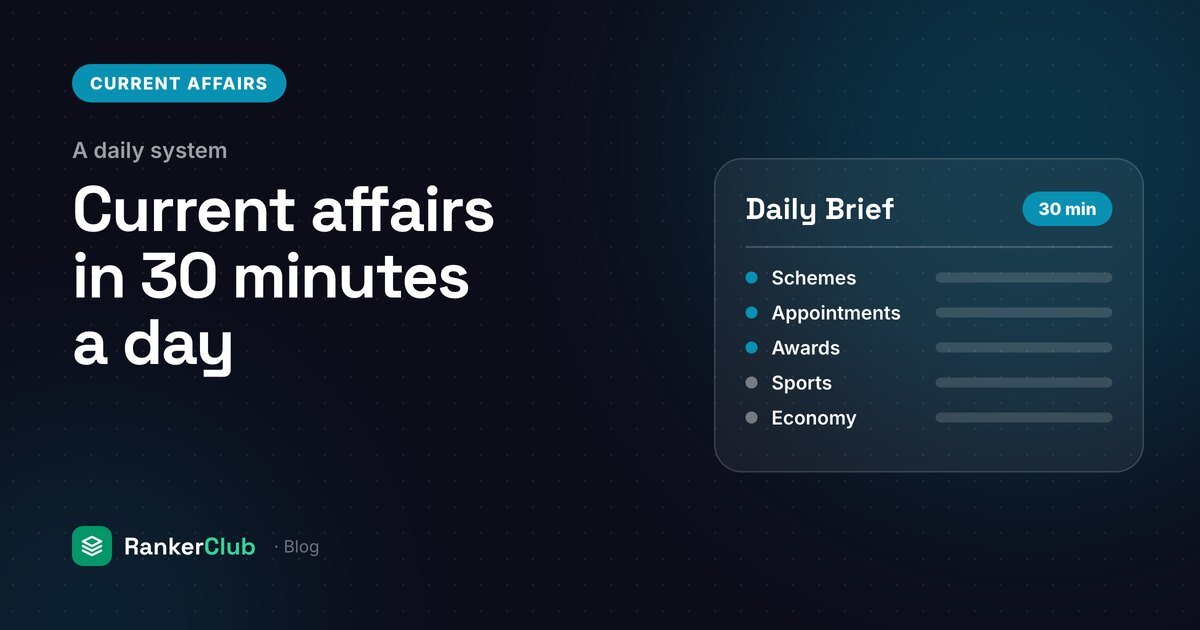
Across SSC, Banking, Railways and state exams, current-affairs questions come overwhelmingly from these buckets:
- Government schemes and policies (name, ministry, launch, objective)
- Appointments — new heads of organisations, governors, chief justices
- Awards and honours
- Sports — tournaments, venues, winners
- Important days and their themes
- Summits, international agreements and organisations
- Economy and banking — RBI policy decisions, budget highlights (especially for banking exams)
- Science & defence — missions, launches, exercises
- Indices and rankings — where India stands
Political opinions, editorials and day-to-day controversies are almost never asked. Skip them guilt-free.
The 30-minute daily system
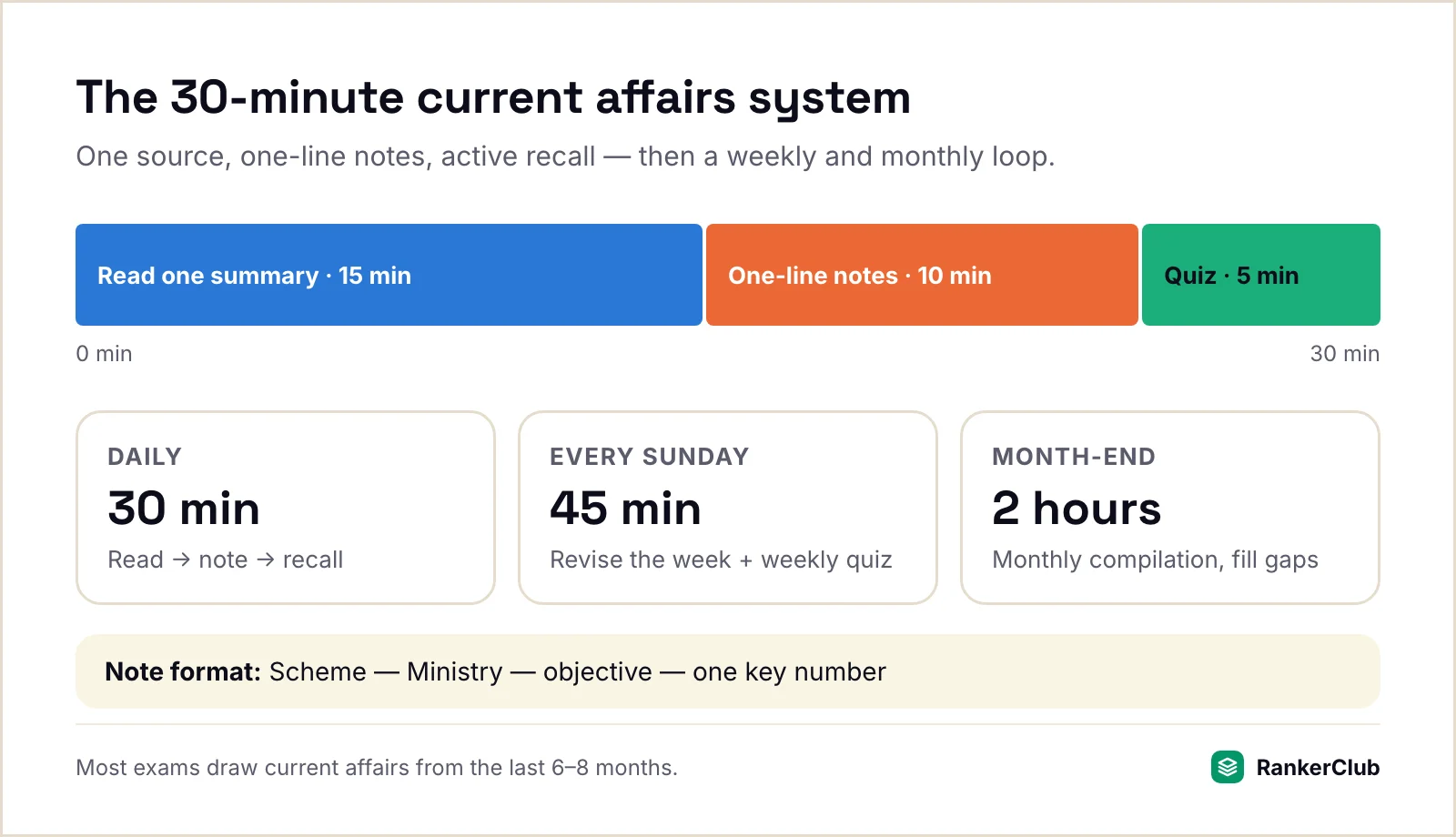
Minutes 0–15: one source, one pass
Pick one daily current-affairs summary (from a newspaper or a reputable exam-prep site) and read it once. Resist the urge to read three sources — they cover the same events.
Minutes 15–25: make one-line notes
For each exam-relevant item, write a single line in a notebook or a notes app:
Scheme name — Ministry — key objective — one number (budget, beneficiaries or date)
One line per fact. If you can't fit it in a line, you're writing too much.
Minutes 25–30: quiz yourself
Close the notes and test yourself on yesterday's facts. Active recall beats re-reading every time.
The weekly and monthly loop
- Every Sunday (45 minutes): revise the week's notes and take a weekly current-affairs quiz.
- Every month-end (2 hours): read a monthly compilation and fill gaps in your notes.
- Before the exam: revise the last 6–8 months (that is the window most exams draw from) two or three times.
Common mistakes to avoid
- Hoarding PDFs. Downloading monthly PDFs you never open is not preparation.
- Starting too late. Current affairs can't be crammed in a week. 30 minutes daily for six months beats 30 hours in the last month.
- Ignoring static links. When a news item mentions a place, organisation or constitutional article, spend one minute on the static fact behind it. Exams love that combination.
Test your GA with the General Awareness section of a free full-length mock and see how you rank against other aspirants.
Frequently asked questions
How many months of current affairs should I study?
Most competitive exams draw current affairs from the last 6–8 months before the exam. Revise that window two or three times before exam day.
Which current affairs topics are most important?
Government schemes, appointments, awards, sports, important days, summits, economy and banking, science and defence, and national rankings and indices.
Should I read the full newspaper for government exams?
Not necessary. One good daily current-affairs summary, plus one-line notes and weekly revision, covers what exams actually ask.